Inside the Art World – A Visit to Equinox Gallery and a Masterclass on the Secondary Market
There are gallery visits that are simply about viewing art, and then there are those that peel back the curtain on how the art world actually functions. My recent trip to Equinox Gallery in Vancouver was distinctly the latter—a perfect blend of visual discovery and industry insight.
Located in the industrial-chic district on Commercial Street, Equinox feels like a sanctuary for serious contemporary and historical Canadian art. The space itself—spacious, modern, and housed in a massive 13,000 square-foot converted warehouse—sets a tone of reverence for the comprehensive body of work on display.
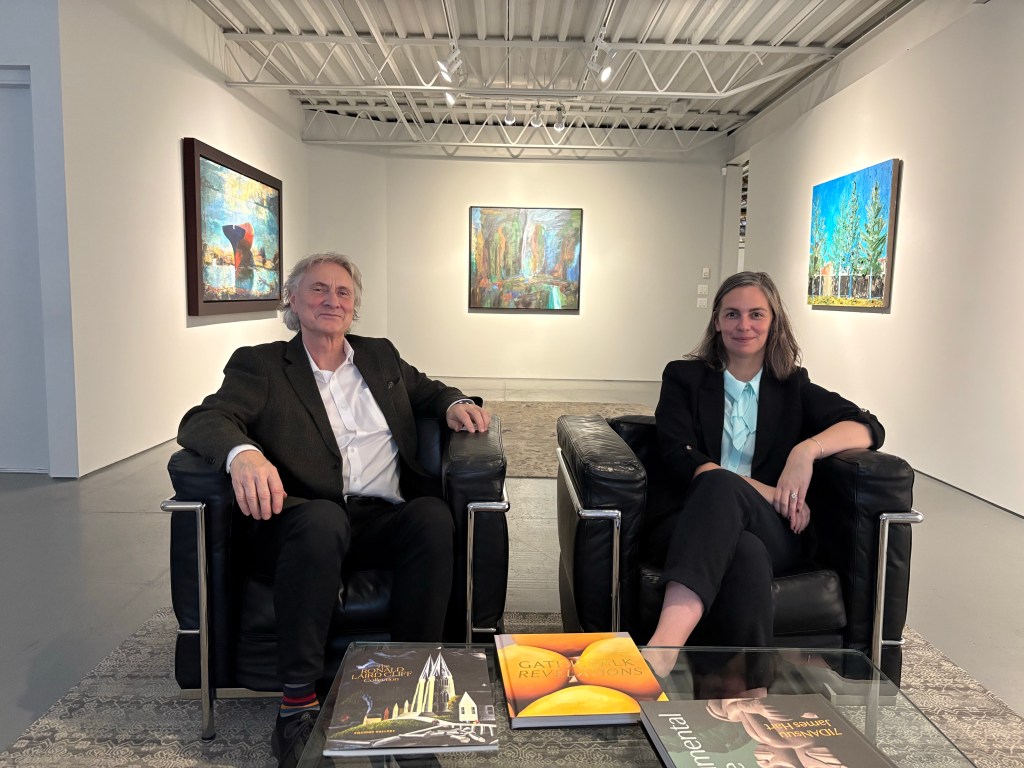
A Warm Welcome from Hannah Reinhart
The visit was hosted by Hannah Reinhart, the gallery’s Exhibitions Manager. Hannah was an exceptional guide, offering a warm and knowledgeable introduction to the gallery’s current program and its impressive historical depth. Her passion for the artists Equinox represents was evident, and she made the experience feel both personal and professional.
Meeting Andy Sylvester: A Legend in the Canadian Scene
The highlight of the visit was the unexpected pleasure of meeting Andy Sylvester, the Owner and Director of Equinox Gallery. Andy is a true veteran of the Canadian art scene, having been a driving force at the gallery since the early 1980s.
It is rare to get one-on-one time with a gallerist of his caliber, and I was grateful for the opportunity to pick his brain. Our conversation quickly turned to the strategic and often opaque world of the secondary market and the broader logistics of running a major cultural institution.
Demystifying the Secondary Market: Private Sale vs. Auction House
Equinox Gallery specializes in the secondary market—the resale of works by established artists. Andy shared critical insights on the two primary channels for this market: public auction and private sale, a domain where Equinox excels.
The Equinox Advantage: Private Sales
The gallery is a strong proponent of the private sale model. This involves brokering a confidential transaction directly between the seller and a vetted buyer, relying on the gallery’s extensive global network and expertise.
| Feature | Private Sale (e.g., Equinox Gallery) | Public Auction House |
| Privacy & Confidentiality | High. All parties, prices, and works remain confidential. Essential for high-profile collectors. | Low. Prices, bidders, and works are public record. |
| Pricing | Negotiated directly between parties, offering flexibility on terms and payment. | Set by competitive, public bidding; final price includes substantial buyer’s premiums. |
| Timing | Flexible and driven by the collector’s needs; transactions can be swift or take time for due diligence. | Rigid calendar schedule; forces an immediate sale, which can be rushed or stressful. |
| Risk | Lower risk of public failure (an unsold work damaging its market reputation). | High risk if the work fails to meet the reserve price (becomes public knowledge). |
| The Takeaway | Equinox’s practice of upholding absolute privacy and confidentiality is a massive value-add, particularly for collectors moving significant family assets or acquiring “blue-chip” pieces discreetly. | Auctions offer price transparency, but this visibility comes at the cost of discretion and control. |
Art as “Furniture” and Tax Strategy
Andy also offered a fascinating, high-level overview of how serious collectors and corporations can approach art strategically. He noted the classification of original works by Canadian artists (meeting specific criteria) as a depreciable capital asset, often categorized as “furniture” (Class 8) for tax purposes.
This classification allows for an amortization write-off through the Capital Cost Allowance (CCA). While art is generally an appreciating asset, for business tax purposes, it can be treated similarly to other depreciable assets. This creates a compelling incentive for Canadian businesses to invest in and display Canadian art.
Disclaimer: Andy’s insight was for informational discussion only. Any business or tax-related decisions should always be made after consulting a qualified tax accountant or financial advisor, as specific rules and rates (like the 20% federal CCA rate for Class 8 property) and eligibility criteria apply.
Nurturing the Ecosystem: Inventory and Legacy
The scale of Equinox’s operation—enabled by its massive inventory—allows it to maintain a comprehensive grasp of the Canadian market.
Final Thoughts
My visit, facilitated by Hannah and anchored by Andy’s strategic insights, was a true masterclass. I left Equinox with a deeper understanding of the entire Canadian art landscape—from the competitive dynamics of public versus private sales, to the strategic financial considerations of collecting, and the commitment required to shepherd an artist’s legacy.
If you are in Vancouver, Equinox Gallery is a must-visit—not just for the incredible art, but to witness an institution that truly understands the history, business, and cultural continuity of collecting.
Visitor Information
Equinox Gallery
- Address: 3642 Commercial Street, Vancouver, BC V5N 4G2
- Website: equinoxgallery.com
Reported by H.Y. R. Cheung in Vancouver Dec 13, 2025.


 Reo's Gallery & Books [RGB]
Leave a comment